Italy is a safe country; however, don’t miss the opportunity to play it safe. If you plan to stay out late at night, go out with friends, stick to the busiest streets, and find out in advance which neighborhoods are safe and which are less so. If you have any doubts, ask a local or contact Prof. Erspamer or one of the teaching assistants. It is best not to travel in empty train cars, especially at night. Violent crime is rare in Italy; however, there is a significant risk of pickpocketing, especially in crowded places, and scammers and con artists try to take advantage of tourists, particularly in large cities and near major attractions. Further information will be provided during the pre-departure meeting and during orientation in Torino.
Emergencies
Please read this page.
Petty theft
Pickpockets operate in most cities, especially in Rome and Naples, but also in Torino and even in Siena, most of the time in crowded places, stations, buses, or trains. 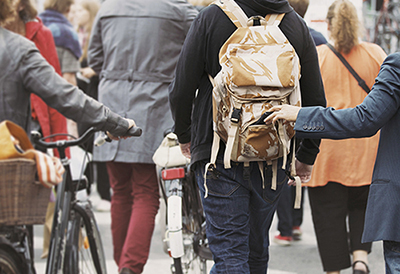 Never put anything valuable in a back pocket or in a backpack. On buses and subways it’s safer to stay away from the door if you can’t find a seat; thieves may try to take something near the door while the train or bus is approaching the stop, and then jump off. The person who bumps into you could distract you so that an accomplice can put their hand in your bag or pocket and steal your wallet, jewelry and other items without you noticing. Someone could block the train door, so that someone else can steal something while you are trying to pass. It is better to miss your stop than to lose your wallet, but usually you have time to get off even if you first back up and then get out when the way is clear.
Reduce the chances of these petty thefts by wearing a money belt under your clothes. Otherwise, carry your wallet in your front rather than your back pocket or use zippered bags with several zippered compartments inside. Carry bags or cameras across your body to make it more difficult to snatch them. If possible, carry a security bag with cut-proof straps and wear anti-theft clothing. When sitting in a café or restaurant, especially outside, don’t just leave your bag on the ground next to you.
Carry only one credit card and enough cash for the day. Leave your passport, money and other important documents in your room, preferably hidden or in a safe. However, it is advisable to always carry at least a photocopy of the main page of your passport, because in Italy, as in most of Europe, it is compulsory to show an identity document when requested by the police.
Traffic dangers
Probably the biggest safety hazard in Italy is traffic. Be careful crossing roads in congested areas: it’s safer to cross with other people. Keep an eye out for reckless scooters and the common practice of shooting through gaps and of lane-splitting (riding between lanes of traffic). Even if you cross at the crosswalk, you will find that some Italians will not slow down, even if they try to go around you. If there is a pedestrian light, you still need to look both ways to be sure you are crossing. Be careful when walking outside, because potholes, broken slabs and uneven pavement are not uncommon.
Catcalling and harassment
Although making eye contact and starting a conversation with strangers is an accepted practice in Italy, this should not be confused with catcalling and street harassment, which are unfortunately more common in some areas of the country. If someone calls you, ignore them and walk away; it is not your duty to confront them. If you are followed or harassed (this also includes inappropriate and unwanted touching of a sexual nature, which is illegal in Italy and can be reported to the police) seek help by going into the nearest shop or bar, calling people around you or calling the emergency services. Assess the level of risk, only do what feels safe and don’t be afraid to ask for help.
Remember that Harvard University’s Sexual and Gender-Based Harassment Policy applies to Harvard staff, students, and faculty abroad as well as those at Harvard. The Office for Gender Equality has a confidential 24-hour hotline at +1 617-495-9100.
Medication
In Italy, even simple medicines such as paracetamol and ibuprofen are sold in pharmacies and are sometimes kept behind the counter: you may have to ask the pharmacist for them. It is useful to write down the generic name of the American medicines you use, as the brand may vary from country to country. If you have an empty container with the name of the active ingredient, show it to the pharmacist. For antibiotics, you will need a prescription from an Italian doctor. It’s always a good idea to have a small first aid kit on hand with band aids, aspirin and an antiseptic cleanser.
Bring a sufficient supply of your prescribed medication; in Italy it may not be possible to find them, or you may need a prescription from an Italian doctor. For more information see the Harvard Global Support Services page Tips for traveling with medication.
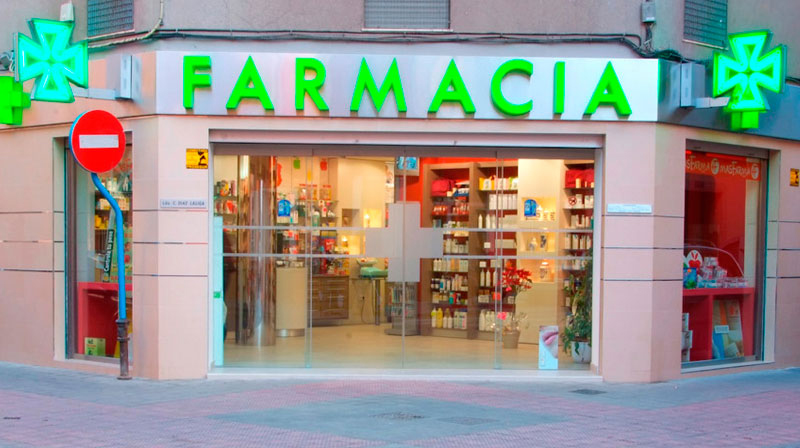 Pharmacies
A “farmacia” is more than just a shop that sells medicines. Italian pharmacists are not medical doctors, but they are highly qualified professionals who specialize in the preparation and administration of medicines. Explain your symptoms to the pharmacist; if they are minor ailments, they will advise you on remedies directly. If their expertise is not sufficient or appropriate, they will refer you to a doctor. Basically, Italian pharmacies are a first point of assistance if you need advice on a medical problem.
Water
Tap water in Italy is safe. If it sometimes has a strange taste, it’s because chlorine has been added to improve safety. Public fountains dispense fresh drinking water in most cities. Do not drink the water if there is a “NON POTABILE” (non drinkable) sign.
Global Support Services
Harvard Global Support Services (GSS) offers an array of useful information to guide you both as you prepare for your trip and throughout the summer.
 ITALY 2026: Torino, Trento, and Siena