 The purpose of this program in Italy and the accompanying academic course is to show that the humanities stem from collective experiences of beauty and community; in this way, they foster social interaction, political awareness, and the ability to think, to care, and to make choices.
Discover the thinkers who have defined the concept of beauty, from Plato, Immanuel Kant, and Martin Heidegger to Martha Nussbaum, Elaine Scarry, and Byung-Chul Han. Study environmental economics with Professor Simone Borghesi and environmental humanities with Professor Onofrio Romano. Explore topics such as rhetoric and etymology, political philosophy and cooperation, authenticity and imagination, degrowth and “non-things,” and Italian culture, art, and society. Reflect on the connections between beauty and the other two fundamental values of the Western tradition: truth and goodness.
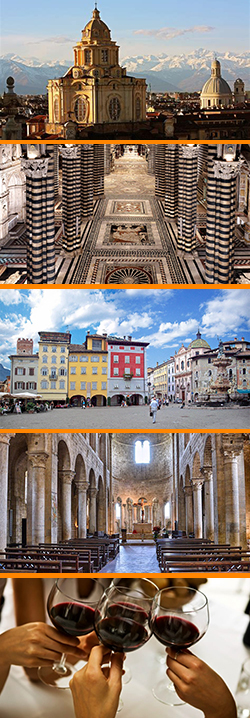
Outside the classroom, numerous activities and trips constitute an integral part of the course. Visit the Baroque palace and gardens of Isola Bella on Lake Maggiore, the Romanesque Abbey of Sant’Antimo, the National Cinema Museum, and Centrale Fies, a center dedicated to the contemporary performing arts. Go shopping at Europe’s largest food market, Porta Palazzo, with hundreds of stalls where you can sample fresh, local, and seasonal products. Watch and discuss seven great films from recent Italian cinema, from Giuseppe Tronatore’s Cinema Paradiso to Alice Rohrwacher’s La chimera. Taste DOCG wines in the Langhe and in Montalcino, take a mini course on coffee at the Espresso Academy, and attend classical music concerts at the Accademia Chigiana. Spend a weekend by a lake in the Alps, immerse yourself in food culture at the University of Gastronomic Sciences, and explore a sustainable mountain farm. Enjoy an experience designed to push you out of your comfort zone and help you build strong bonds with the other participants.
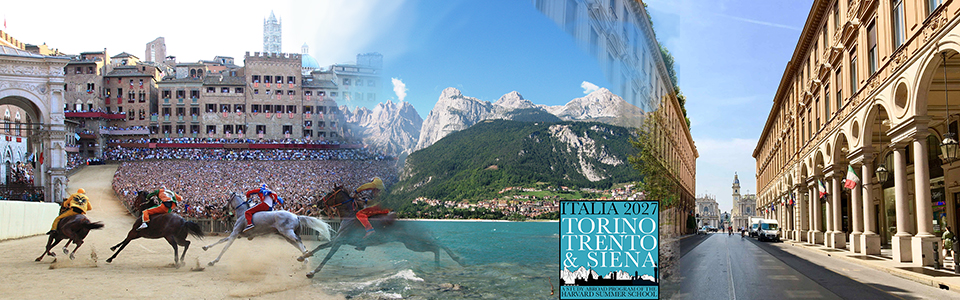
We will not be tourists; we’ll immerse ourselves in the culture and customs of the places we visit and strive to understand their communities. In Siena, students will be deeply involved in the life of the city; each of them will join one of the contrade and help with the preparations for the Palio, the horse race that has been the city’s most important event for centuries.
No knowledge of Italian required. Optional Italian language instruction is offered and recommended, both at the beginner and intermediate/advanced level, though not for credit. No prior coursework in the humanities is required. What makes this program so rich and impactful is also the fact that our group will be composed of students from the arts and humanities, STEM fields, the social sciences, and economics. Most of the students come from Harvard, but each year a few students from other universities also participate.
For more information and a detailed schedule of classes and activities, see the syllabus.
.

