 The purpose of this program and its course is to show that aesthetics and culture are essential for critical thinking, sustainable development, community-building and political action.
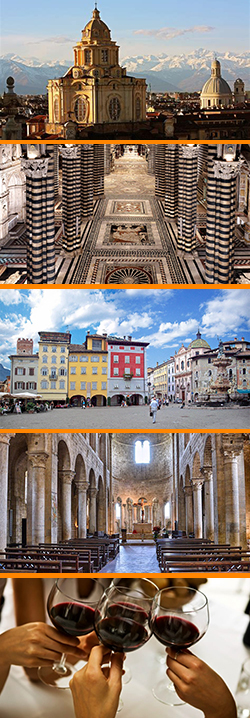
Learn about the thinkers and writers that have defined the concept of beauty, from Plato, Immanuel Kant and Martin Heidegger, to Martha Nussbaum, Elaine Scarry, and Byung-Chul Han. Study environmental economics with Professor Simone Borghesi and environmental humanities with Professor Onofrio Romano. Address topics such as rhetoric and etymology, political philosophy and cooperation, authenticity and imagination, degrowth and non-things, Italian culture and society. Reflect upon the connection between beauty and the other two main values in the Western tradition, truth and goodness. Outside the classroom, numerous activities and trips constitute an integral part of the course. Visit the garden extravaganza of Isola Bella on Lake Maggiore, the Romanesque abbey of Sant’Antimo, the National Cinema Museum, the largest food market in Europe, with hundreds of stalls that will give you the opportunity to understand what fresh produce is in season. Watch eight masterpieces of Italian cinema, from Federico Fellini’s La dolce vita to Alice Rohrwacher’s La chimera. Taste DOCG wines, learn the techniques for making espresso, attend opera and jazz concerts. Bike the Lucca city walls, spend a weekend on a lake in the Alps and visit a nearby sustainable farm. Enjoy an experience that aims to get you out of your comfort zone and build strong bonds among participants.
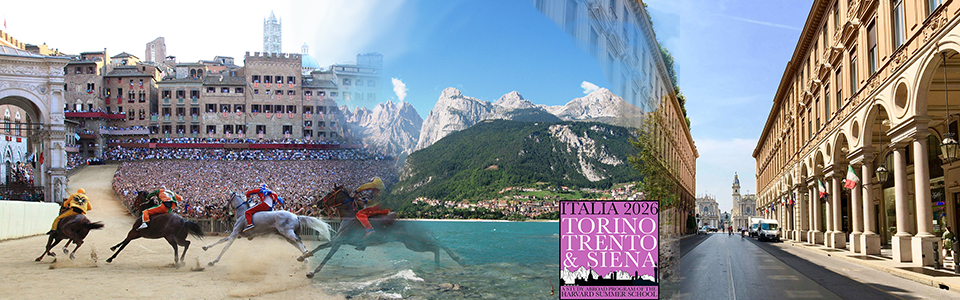
We will not just be tourists; we will view the important cultural touchstones of the places we visit in the context of their communities. In Siena, students will be deeply involved in the life of the city; each of them will be invited to join one of the contrade (wards) and participate in the preparation of the Palio, the horse race which has been the city’s most important event for centuries.
No knowledge of Italian required. Optional Italian language instruction is offered both at the beginner and intermediate/advanced level, though not for credit. No prior courses in the humanities or economics are required. Part of what makes this program rich and incisive is the very fact that our group will be composed of students in the arts and humanities, STEM, and social sciences and economics. Most of the students are from Harvard, but every year students from other universities have also participated.
For more information and a detailed schedule of classes and activities, see the syllabus.
.
 ITALY 2026: Torino, Trento, and Siena